


 english
 Русский
 Español
 Русский
In metal fabrication, blade performance is rarely determined by material quality alone. An incorrect tooth pitch, unsuitable blade width, or mismatch between the blade and workpiece can advice to vibration, premature tooth wear, poor chip removal, and unnecessary blade changes. For engineers and purchasing teams, selecting a blade according to the actual cutting application is therefore more practical than choosing solely by price or material grade. A properly specified M42 Bi-metal band saw blade can provide a useful balance of cutting performance, wear resistance, and application flexibility for many industrial metal-cutting operations.
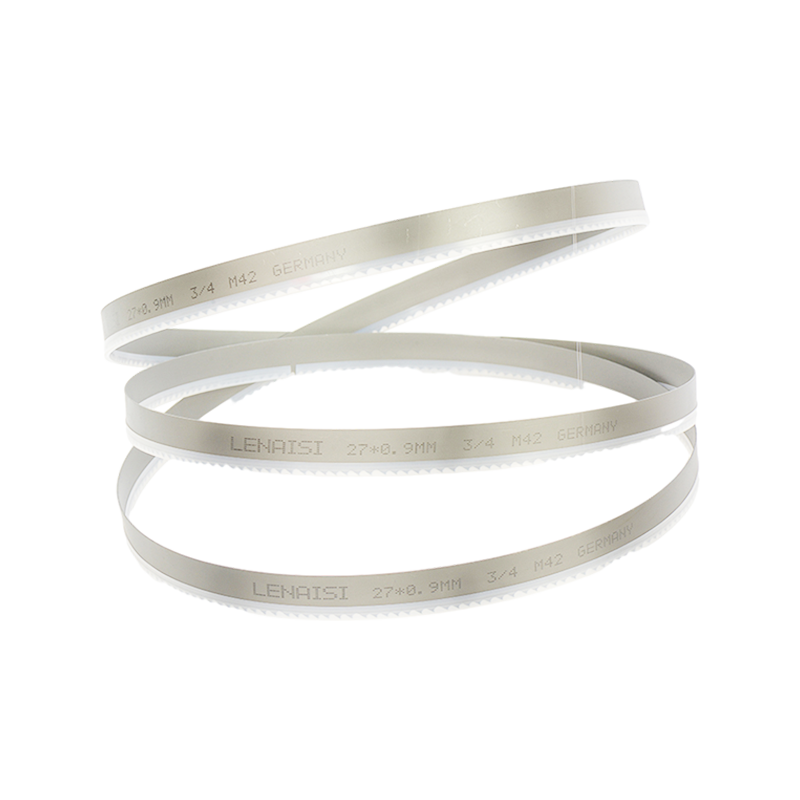
Tooth Pitch Should Match the Workpiece
Tooth pitch is one of the specifications engineers should review when selecting a metal-cutting band saw blade. Solid bars, tubes, profiles, and bundled materials create different cutting conditions because the blade engages different amounts of material during each cycle.
Variable-pitch teeth are commonly used to accommodate changing engagement conditions and reduce repetitive tooth impact. Current M42 bi-metal blade ranges are available in multiple TPI combinations for different material dimensions and cutting applications.
For procurement teams, this means the required blade should be specified according to the workpiece rather than simply ordering the same TPI for every job.
Avoiding Tooth Stripping in Production
Tooth stripping can become a costly problem when the blade is exposed to excessive impact or an unsuitable cutting load. This is particularly relevant when production involves structural sections, profiles, bundles, or workpieces with changing cross-sections.
A suitable tooth geometry can help the blade handle these conditions more consistently. Some M42 bi-metal designs use variable tooth forms and positive rake angles to improve cutting engagement and chip formation.
Before changing blades, manufacturers should also review machine condition, blade tension, feed pressure, and cutting parameters. A blade problem is not always caused by the blade itself.
M42 HSS Brings a Practical Material Combination
The construction of a bi-metal blade combines a hardened high-speed-steel cutting edge with a tougher backing material. M42 is widely used for the tooth material because its cobalt-containing HSS provides a combination of hardness and heat resistance suited to industrial metal cutting. Commercial M42 bi-metal blades commonly specify tooth hardness in the range of 67–69 HRC.
For buyers, this construction makes M42 a practical option when a production line needs more capability than a basic carbon-steel blade while remaining suitable for a broad range of conventional metal-cutting applications.
Blade Geometry Affects Cutting Stability
Blade width and thickness should be considered together with the saw machine and workpiece dimensions. A blade designed for a large solid section may not be appropriate for thinner profiles or smaller components.
Tooth geometry also influences cutting behavior. Positive rake designs can support more aggressive material engagement, while other tooth configurations are developed for applications where vibration, chip accumulation, or difficult cutting conditions need additional attention.
For this reason, an experienced blade manufacturer does not recommend a product from TPI alone. Application details are essential when selecting the complete blade specification.
Cutting Different Materials Requires Different Choices
A production workshop may cut carbon steel one day and stainless steel, alloy steel, aluminum, or other materials the next. Treating these materials as interchangeable can make blade selection unnecessarily difficult.
M42 bi-metal blades are available for a broad range of metal-cutting applications, but the appropriate tooth pitch and blade design still depend on material characteristics and workpiece dimensions. Some commercial ranges specifically distinguish between general-purpose cutting, profiles, solids, and more demanding materials.
Manufacturers can help buyers create a practical blade selection system instead of maintaining an unnecessarily large number of similar specifications.
What Buyers Should Include in an Inquiry
A detailed inquiry allows the blade supplier to recommend a more suitable specification and reduces back-and-forth communication during sourcing. For repeat industrial orders, consistent technical information also helps maintain the same cutting setup between batches.
Useful information includes:
- Saw machine model and blade dimensions
- Workpiece material and hardness
- Solid, tube, profile, or bundled section
- Typical material dimensions
- Required TPI or current blade specification
- Cutting volume and operating conditions
- Problems experienced with the existing blade
As a manufacturer, we use this application information to evaluate tooth pitch, blade dimensions, tooth geometry, and material selection rather than treating every order as a standard product request.
Building a More Reliable Blade Selection Process
Blade purchasing becomes more effective when engineers connect the product specification with the actual cutting process. Instead of focusing only on unit cost, buyers can evaluate tooth life, cutting consistency, machine compatibility, material range, and replacement frequency together.
For manufacturers and distributors serving metalworking customers, this application-based approach can also simplify product recommendations and repeat orders. With the right combination of M42 HSS tooth material, backing steel, tooth geometry, and pitch, an M42 Bi-metal band saw blade can become a dependable choice for a wide range of industrial cutting requirements.
 CONTACT US
 CONTACT US