


 english
 Русский
 Español
 Русский
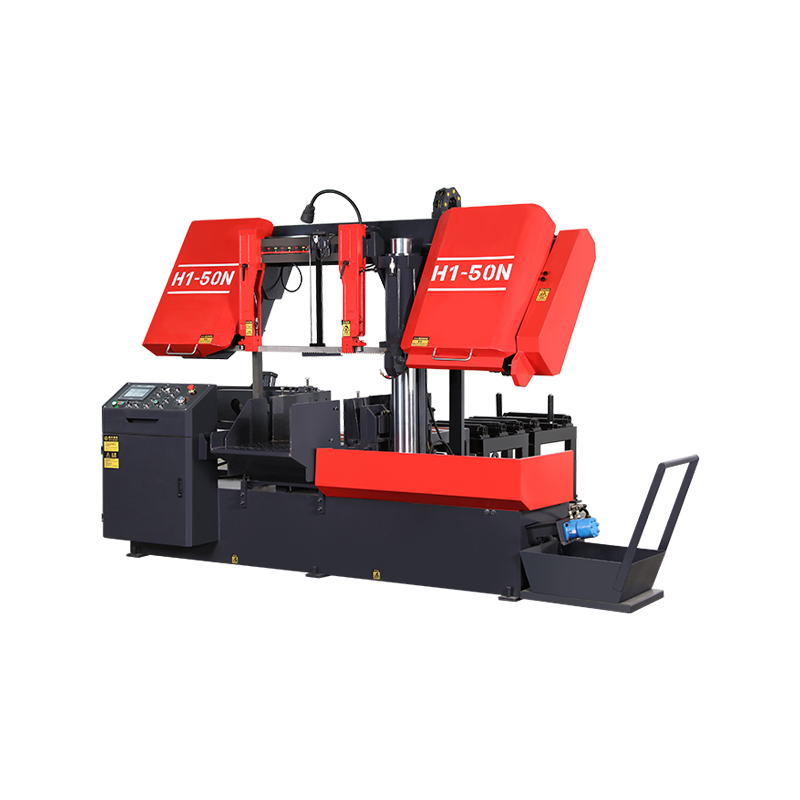
M42 Bi-metal band saw blade and Band sawing machine are frequently paired in metal cutting workshops where brass valve processing requires controlled cutting behavior and consistent dimensional output. When cutting brass components, the interaction between blade structure and machine feed system directly affects surface condition, chip formation, and stability across repeated cutting cycles.
Cutting challenges in brass valve processing
Brass valve production involves relatively soft but sticky materials that behave differently compared with steel during sawing operations. On a Band sawing machine, this material tendency can create chip adhesion around tooth edges, which may cause irregular cutting resistance over time. When resistance fluctuates, the machine load becomes less uniform, and cutting consistency can be affected across batches.
Another common issue is deformation sensitivity. Brass components, especially thin-walled valve bodies, can deform if cutting pressure is uneven or vibration is not well controlled. Traditional blades may struggle to maintain steady engagement, especially during continuous production runs, where heat buildup and chip accumulation become more noticeable.
In addition, production lines handling brass valves often switch between different diameters and wall thicknesses. This variation requires a cutting tool that can adapt without frequent parameter adjustments on the Band sawing machine, otherwise setup time increases and workflow becomes fragmented.
Structural adjustment in M42 Bi-metal blade for softer alloys
The M42 Bi-metal band saw blade uses a dual-layer construction combining a flexible backing material with a high-speed steel edge. In brass valve cutting applications, this structure helps maintain steady tooth engagement while reducing abrupt cutting resistance changes.
Compared with conventional carbon-based blades, the bi-metal structure supports more controlled chip formation. Brass chips tend to be soft and continuous, and if not properly broken, they can accumulate around the cutting zone. The tooth geometry of the M42 blade is designed to guide chip removal more evenly, which helps maintain a more stable cutting path on the Band sawing machine.
Key structural characteristics include:
- Tooth geometry designed for controlled chip breaking in soft metals
- Flexible backing layer reducing vibration transfer to the machine frame
- Heat resistance supporting continuous cutting cycles
- Stable edge retention during repeated contact with brass materials
These characteristics help maintain consistent feed behavior, especially when cutting thin-walled brass valve bodies where pressure sensitivity is relatively high.
Application scenarios in brass valve manufacturing
Brass valve production environments vary from small machining workshops to automated assembly lines. The M42 Bi-metal band saw blade combined with a Band sawing machine is commonly used in different stages of the production chain, particularly in blank preparation and semi-finished part trimming.
In valve body cutting operations, the blade is used to section brass rods into manageable lengths before turning and milling. In this stage, dimensional consistency is important because variations can affect later machining accuracy. The stable cutting path helps maintain uniform blanks.
In repair and maintenance workshops, brass valves are often cut for modification or replacement fitting. These operations require flexibility because material dimensions are not always standardized. The blade’s adaptability reduces the need for frequent machine reconfiguration.
In batch production environments, where multiple valve sizes are processed in sequence, the Band sawing machine works continuously for extended periods. The blade’s steady engagement behavior supports smoother transitions between different cutting loads.
Operational observations from workshop usage
In typical brass valve processing setups, cutting performance is often evaluated based on chip behavior, surface condition, and machine load variation. Observations from workshop usage show that blade type influences how smoothly these factors interact during continuous operation.
For example, when cutting 20–60 mm brass rods:
- Conventional blades tend to produce longer, continuous chips that may wrap around the tooth area
- Machine load readings show small fluctuations during longer cutting cycles
- More frequent cleaning interruptions may be required in chip-heavy conditions
With M42 Bi-metal band saw blade usage:
- Chip formation appears more segmented and easier to discharge from the cutting zone
- Band sawing machine load curves show more even distribution during steady feed rates
- Cleaning intervals during production runs become less frequent in comparison scenarios
A simplified observation table:
|
Cutting Condition |
Brass Material Response |
Machine Behavior (Band sawing machine) |
|
Thin-wall valve bodies |
Higher deformation risk |
Requires controlled feed rates |
|
Medium solid brass rods |
Stable chip flow |
More consistent load pattern |
|
Mixed batch production |
Variable thickness |
Needs adaptable cutting response |
Technical comparison in brass cutting behavior
|
Feature |
Standard Carbon Blade |
M42 Bi-metal Blade |
|
Chip control in brass |
Less stable |
More controlled |
|
Vibration during cutting |
Noticeable |
Reduced transfer |
|
Cutting path consistency |
Variable |
More steady |
|
Machine load variation |
Fluctuating |
Smoother pattern |
|
Suitability for batch work |
Limited |
Broader range |
Influence on production workflow in valve manufacturing
Brass valve manufacturing relies on repeatable cutting conditions because downstream processes such as drilling, threading, and sealing depend on initial blank accuracy. When cutting conditions fluctuate, additional machining adjustments may be required later, which affects production flow.
The pairing of M42 Bi-metal band saw blade with Band sawing machine supports more consistent cutting behavior, which helps reduce variation in initial blank shapes. This contributes to smoother transition into subsequent machining stages.
In production scheduling, stable cutting cycles also allow operators to better predict machine usage time per batch. This reduces uncertainty in workflow planning, particularly in facilities handling mixed valve specifications.
 CONTACT US
 CONTACT US